The Girl with the Dragon Tattoo – Review

The Girl with the Dragon Tattoo (2011)

Director: David Fincher. Writers: Steven Zaillian. Cast: Daniel CraigRooney MaraChristopher PlummerStellan SkarsgårdRobin Wright

Your appreciation and enjoyment for  this film mainly comes down to whether you buy into the story or not and whether you are you a fan of the original book (I should probably say books, since this is the first part of a trilogy). Unfortunately my answer to both questions is quite a drastic no: I know I am going to be quite unpopular with this statement, but I’ve never really fallen in love with the book and I in fact just don’t seem to be able to  find the appeal for the actual story itself. I find it quite derivative, exploitive, contrived and a bit heavy-handed to be honest. These exact same problems are translated (in fact even enhanced) into both film adaptations.

It’s probably unfair to draw comparisons with Niels Arden Oplev‘s 2009 version, but also unavoidable. There are of course similarities, but given the fact that David Fincher is directing, the US version is a lot more slicker and cinematic. It is also closer to the original book in many places, but, as always in condensing it all into a movie, it has lost some of its more polemical thrusts from Larsson‘s story and some of the details which made the characters so compelling. All for the sake of the actual crime/mystery plot (which let’s face it, it’s pretty bland for today’s standards and brings very little new to the genre). So in the end, not only the film suffers from the same problems of the book but by shrinking it all it has lost some of its more subtle subtext too.

I am not really saying anything new here: what works in books doesn’t necessarily work movies. For example, the film spends a long time setting up the two main characters who don’t meet until a good hour and 20 minutes into the story. And yet despite all this time Daniel Craig‘s character is just as elusive to the audience as it was at the beginning. That is an ongoing problem with Fincher’s movies. His usual cold approach to film-making and detachment from his characters makes it always very hard for anyone to empathise with anyone on the screen. Craig does bring some unexpected charm and a slight sense of humour to his character (something which was completely absent in the previous version), but it’s really not enough to make you care for his character, let alone for making you want to watch him again for the next couple of sequels (Fincher has recently announced his interest to direct both sequels back to back… But no official announcement will be made until this one get released, of course).

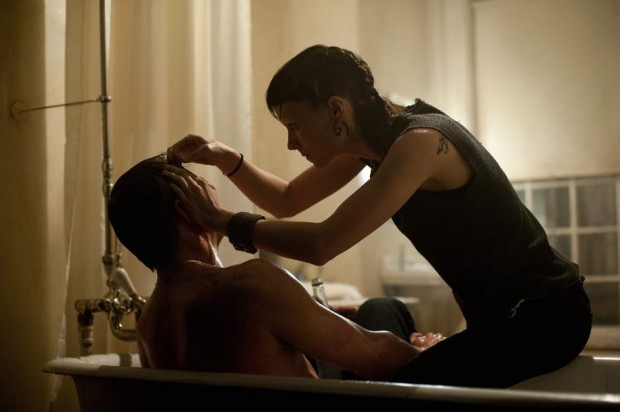
It’s Rooney Mara who really steals the show here (well, let face it, so did Noomi Rapace in the previous version. It’s a great part to play!). This is one of the performances of the year and there will certainly be nominations and awards for her coming left and right over the next few months. She even manages bring a certain realism to an otherwise over-the-top character by convey both fragility and an incredible strength, sometimes with pure simple looks.

However, did we really need that 1 hour and 20 minutes of preparation before these two characters meet? Did we really need to see the infamous rape scene? Yes of course, it’s that rape that gives her the motivation for wanting to solve the crime, but why couldn’t they just convey that with a quick flashback? Why was the audience allowed inside that room watching not only the rape but also her revenge to her rapist? Wouldn’t it have been just as effective and less exploitive if we had been left outside the door, maybe listening to the screams?

The problem is, if you take all that preamble out of the equation, you’re actually left with very little else because let’s face it, as a mystery this is a fairly derivative film.

As I said, these are all queries with the book and the story itself . Given the material Fincher has probably down the best he could. This is a handsome film, with some solid acting (Plummer once again is at his best!)  but in the end you’re left with a sense of “…so what?”.

I couldn’t help feeling that everything that Fincher did in this film, he had already done it before.

The dark tones of Se7en, the seedy  and multilayered atmosphere of Zodiac, the dark ominous  music (if we can call it that) by Trent Reznor from  The Social Network.

Finally it’s probably worth mentioning the impressive “James Bondesque” title sequence (again, Fincher has down beautiful title sequences before) to the notes of the cover version of  “Immigrant Song” by Led Zeppelin which I found absolutely mesmerizing and yet somehow seemed to belong to a different film altogether.

In the end this film adds very little to the previous version, aside from giving us the wonderful Rooney Mara, and certainly adds nothing to what I already know about David Fincher. I just look forward to seeing him handling a script and a story worth of his craft, because I do believe he’s one of the best directors out there right now…

6.5/10
The Descendants – Review

The Descendants (2011) 

Director: Alexander Payne. Writer: Alexander Payne. Stars: George ClooneyShailene WoodleyAmara MillerNick Krause, Beau BridgesMatthew Lillard

 Once in a while a movie comes along and shows that Hollywood can do more than just cheesy rom-coms or big blockbusters with a tiny little brain. In the case of Alexander Payne, it seems we had to wait 7 years, which is the time he took him to make another new film after his previous Sideways. The Descendants not only shows us the same intelligence, nuance and bittersweetness from his previous work but actually manages to take it a step beyond.
It might not be the most original story ever seen on screen, but it’s treated with such maturity and honesty and in such simple and unfussy way that it’s hard not to fall in love with it. I certainly did.
I saw it a few weeks ago and unlike many other films seen recently, it sticked in my mind.
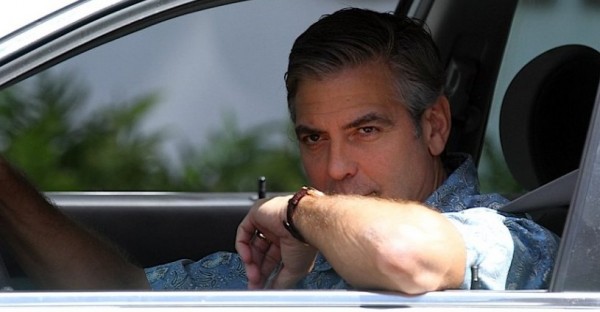
Clooney dresses down like rarely before (literally: he’s never been wearing worse clothes!) to play the part of  the the everyday man Matt King. In this film he looks as scruffy as ever, with a bad haircut and unshaven look. And as he abandons his trademark smirks and smiles he manages to give one of his best performance to date: best because he’s actually so normal, so understated and yet so powerful. It is actually the hardest role to pull off.
He’s funny at times and yet incredibly moving at others. I won’t give away the ending of the film, but his final speech, all shot in a tight close-up  was absolutely heart breaking and its sincerity and realism had me in tears like a baby.
It is an incredibly powerful film: a story about grief, betrayal and the breaking of a marriage, which manages to be funny at the same time. And it’s this careful balance between the sad and the lighter moments and its low-key approach that makes “the Descendants” so successful.
It’s a hard film to pigeonhole: nothing is really black or white.It’s not a comedy nor a drama. It’s set in the Hawaii Islands and yet there’s no sun (in fact it’s always raining and gray),  good people do bad things and bad people surprise us by showing an unexpected side of their personas. In that respect it’s a very realistic film, in a real setting, with real people; and just like in real life, people are rarely perfect and they’re not “always-good” or “always-bad” but nonetheless they can be surprising too
The pacing of the film is rather slow (that’s not a criticism, nor the film is boring) and somehow that allows us to get to closer and closer to the characters, understand them, learn about their imperfections and flaws and somehow fall in love with them, because despite the extraordinary situations, they really feel human.
So that by the time we get to the final emotional scenes with Clooney, it all really pays off beautifully.
I suppose this is probably one of those movies that will appeal to a much older audience or, dare-I-say, a more mature one, but if you’re willing to go with it, not only you’ll find the best Clooney ever, but also one of the best films of the year.
8.5/10

Hugo 3D – Review

Hugo 3D(2011) 

Directed by Martin Scorsese. Starring Ben KingsleyAsa ButterfieldChloë Grace MoretzChristopher LeeSacha Baron Cohen.

Accompanied by a series of glorious reviews and voted Best Film of the year by the National Board of Review Hugo has finally hit our multiplex. Obviously the expectations are pretty high!

On paper this has got all the elements to be a true masterpiece. Loveable kids, Paris in the 30s, passion for old movies, a heart-melting story, magical sets, spectacular 3d, an amazing cast… and of course Martin Scorsese himself at its helm. How can it possibly go wrong?

Unfortunately despite all these potentials, the film itself  never really took off for me and for all its good intentions, its great heart and undoubtedly its mastery in film-making, in the end Hugo 3D cannot hide the fact that it’s all over the place and actually just a bit boring.

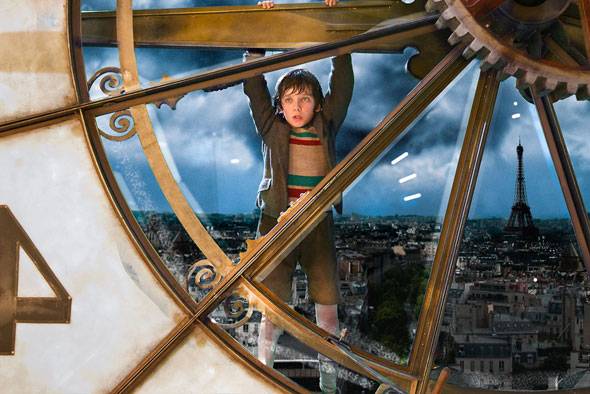
Yes some of the camerawork is astonishing and Marty certainly knows how integrate 3D into his story, making it more than just a gimmick: right from the beginning we can see the potential as we are treated with a one-shot-wonder which pushes the 3D effects beyond anything we’ve seen before (yes, even Avatar). The camera glides, twirls and swoops across a train station, then jibs up along ladders and flies through giant clock mechanisms. But even this first burst of energy gets a bit tiresome after a while and the film runs out of steam pretty soon after that and not even all those camera swoops, chases and constant music can raise the level of excitement.

The main problem seems to be that Scorsese is so concerned about the message of preserving old films, that he forgets about how to make it an involving and exciting story, and most of all, he forgets who central character should be: the film is called Hugo after all. In fact the most inspired scenes in the movies have nothing to do with Hugo himself but rather with Ben Kingsley’s character, the French magician/film-maker Georges Méliès (yes, the one from the 1902 “Le Voyage Dans La Lune, which you can see below). The scenes around him are probably some of the most inspired… and the best. There’s a certain pleasure in seeing the behind the scenes of such iconic moments in cinema history. There’s a great sense of nostalgia for that comes with them and Scorsese’s attention to details is definitely to be praised. However none of this will probably make any difference to the average viewer who will soon wonder where all this is going and surely will get a bit bored.

It’s hard to tell who is this film aimed at. It is definitely too slow for kids, too diluted for the average person, too rhetorical and over-explicit and a bit silly for the real cinephiles.

Scorsese might have made this film for his kids (or so at least he claims), but it’s clear that he has quite got that open-mindedness about children and that innocence  and sense of wonder (that for example Spielberg has) to tell a story about them which would ring true: both Hugo and Isabel (an unusually wooden Chloë Grace Moretz) speak a language which doesn’t quite belong to them (it’s as if Scorsese himself were talking). In the end it’s clear that the director is much more interested in telling a story about the restoration of old movies, rather than a fairy tale about a kid growing up and finding a family. Funnily enough, even the message about saving old films from the past loses a little bit of credibility (and honesty) the moment in which Scorsese decides to turn Méliès’ movies into 3D.

The fault at the core of all this is that Scorsese is just trying to be too clever and cram too much in it.

In a way he is even trying to make his own “Rear window“, by giving us little stories around the train station, as seen from the eyes of Hugo, just like in Hitchcock’s masterpiece we were treated to glimpses of lives seen through the eyes of James Stewart. However while in Rear Windows those stories where a representation of our character’s state of mind (his doubts and fears about married life) and always seen his own the point of view, here much too often we lose track of Hugo himself and the lives we get too see are completely irrelevant to the central story. Most them even feel a bit misjudged too. Sacha Baron Cohen’s turn as police inspector and his slapstick gags are never really as funny as they should be the romances between the various couples are as moving or even quirky as they should to be and in fact not only they seem to belong to a different film altogether but they also pull the film in too many different directions.

It’s surprising how a film so concerned about the art of storytelling could lose itself so much when trying to actually tell a simple story.

6/10

A Dangerous Method – Review

A Dangerous Method (2011) 

Directed by: David Cronenberg. Written by: Christopher Hampton. Starring Michael FassbenderKeira KnightleyViggo Mortensen.

I can’t remember the last time when I have been so much in disagreement with the general critical response for a movie… Everywhere I look I seem to hear and read high praises for Cronenberg’s latest work, and yet I am willing to bet that few of those who claimed to like it so much would be ready to watch it again. As far as I am concerned I am struggling to find something positive to say (well, yes, nice costumes…) and the only reason why my vote isn’t any lower is because I am willing to admit that I might have not been in the right mood for it.

Even in his most flawed films, Cronenberg has always been an interesting director, or at least able to create not only an almost palpable atmosphere, but also a particularly defined style and vision which set him apart from the usual Hollywood crowd.

And yet this one seems a film with no direction whatsoever. Not only each sequence felt random and inconsequential as if not necessarily edited in the right order, without any real feeling of natural progression from the previous one into the next, but also it was all so static and lifeless that sometimes I even wondered whether anyone was actually directing at all. At no point I felt any sympathy for any of the character: in fact, not only I did not like any of them, but I didn’t even hate them either. I just didn’t care.

And this is is a rather strange thing to say, because on paper, a film about the relationship between Carl Jung and Sigmund Freud (and consequently the birth of psychoanalysis) sounded to me very intriguing indeed. Sadly, pretty earlier on into “A dangerous Method” I realised that this wasn’t really the type of film I was hoping to see.

I found myself uneasy right from the word “go”, that is from the moment I saw Keira Knightley overacting like never before and stretching her chin to new unbelievable levels, as if screaming to the audience “I want that Oscar!!”. Well, darling, not this time.

Then, after the early screams, it all calmed down a bit and the dialogue started… and that’s when it got worse! For a film which should rely on words more than action itself (especially given the static nature of it all), I found the script absolutely puerile. It all felt like it was written by a high school kid, who’s just heard a few things about Freud and wants to impress his friend with his newly acquired knowledge. I mean, there are actually lines like “You Freud, have always sex in your mind. Why does everything always has to do with sex?”!  Really? Mr Hampton, who are you writing this script for? Surely your target audience doesn’t need things spell out so boldly and blatantly.

It was like reading a checklist of all the possible clichés one could think about psychoanalysis (and Freud in particular). Who is this film for anyway? At times it felt like it was so ridiculously basic, as if it was written for people who have never even heard of Freud and Jung. Other times it was all so ridden with heavy handed quotes and so “up its own self” that it felt like watching some boring lecture given by an even more bored teacher, sitting on your old desk back in school. From such a renowned scriptwriter (he wrote Dangerous Liaisons and Atonement among the other things) I was expecting a lot more: maybe Mr Hampton should watch a few episodes of HBO’s classy “In Treatment” to learn a thing of two about the subtlety of bringing psychoanalysis to the screen.

As far as the two leading male actors (Fassbender and Mortensen, who by the way was so good in both Cronenberg “A History of Violence” and “Eastern Promises”), they were as good as they could possibly be, but in the end they both failed to impress, move, or even raise any sort of emotion beyond boredom. But then again, that’s hardly surprising given both the script they were actually given and a clear lack of any direction, which forced them to talk at each other in the most contrived scenes and badly staged, where even the extras in the background seemed fake and moved slowly and gently like… erm…well, extras (particularly noticeable in the scene by the river).

Sorry David, not this time for me.

5/10

Young Adult – Review

YOUNG ADULT (2011)

Directed by Jason Reitman. Written by Diablo Cody. Starring Charlize Theron, Patrick Wilson, Patton Oswalt.

After the massive success of Juno, director Jason Reitman and writer Diablo Cody team up again, this time focusing their attention, not on a pregnant teenager (Juno) or a middle-aged lonely traveller (up in the Air), but on one the most dislikeable character you can think of.

Charlize Theron basically plays a narcissistic bitch, Mavis Gary, who heads back to her small hometown with the only intention to reclaim the heart of her high school flame (Patrick Wilson) despite the fact that he’s now happily married with a newly born baby.

Of course movie history is full of great awful lead characters (think of Goodfellas, just to mention one). A good story doesn’t necessarily has to have somebody you like to be appreciated, and you don’t really need to identify with a lead character to enjoy a movie… However, be aware it may end up testing your patience unless it’s all exceptionally grabby… and that’s exactly what happened to me watching this film. Charlize might be one of the most stunningly beautiful actress of our time, but her character Mavis is really not a nice person at all…

Diablo Cody said she’s based the character on herself… a bold statement which makes me like her less and less: let’s just hope she was exaggerating… Mavis is selfish, obnoxious, irritating, insensitive, and basically just not very good with people: eventually she ends up hurting not just her friends, but her family… and even her dog, but most importantly herself.

The film is intentionally uncomfortable, unconventional and quite low-key, but however brave is the attempt from both the screenplay and the direction to avoid any sugary redemption story (something which has been much criticised in the previous “Up in the Air” for example), and a typical Hollywood construction, the film is in the end rather inconclusive.

We never really get a grip on Mavis. And when we finally do, since we never really liked her that much, we just do not feel enough empathy or pain or sorrow or even curiosity for what she did or what she’s going to do. In other words, we don’t care (or at least I didn’t). Eventually all we are left it is just a good performance by Charlize Theron, but then again, after her amazing turn in Monster in 2003, she’s got nothing more to prove to me.

Once again she didn’t settle for an easy part and she certainly managed to give enough depth to a character which otherwise would have been a bit of a caricature, but despite all that, “Young Adult” never really took off for me.

It is on the whole a fairly predictable film which moves a very constant pace towards a pretty obvious (though masked as unconventional) conclusion.

In the end it all feels rather pointless. Of course, you may argue that such is real life: journeys of discoveries and redemption are true only in Hollywood movies and this wants to be different. Well, it certainly succeeds in that: it is different. This isn’t the feel-good movie that “Juno” was (and I’m fine with that), nor it is as quirky, fresh and surprising as “Up in the Air” was. It is probably a much more mature effort and a lot braver, but all that doesn’t necessarily make it a great film. In the end there was just to little in it.

I’m happy I saw it, but I don’t think I will want to watch it again and I’m sure once the awards buzz fades out the film will actually disappear with it.

6/10