The Reason I Jump

The Reason I Jump ⭐️⭐️⭐️⭐️

Director: Jerry Rothwell. Cast: Jim FujiwaraDavid MitchellJordan O’Donegan

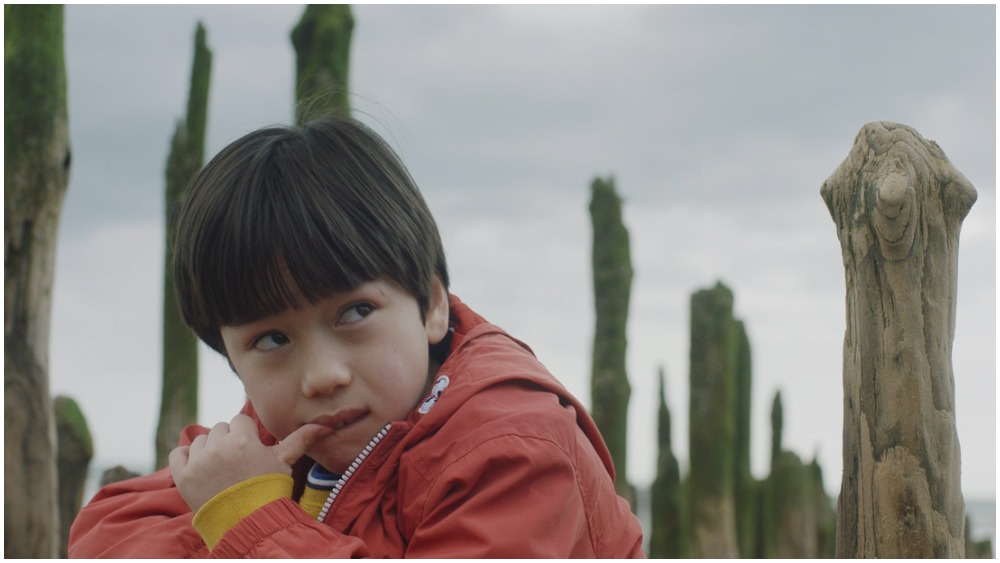
Back in 2007 in Japan, Naoki Higashida, a boy of only 13 years old affected bt “non-verbal” autism, wrote an incredible book “The reason I jumped”. It was translated 5 years later into Englilsh and it was a real game changer.It revolutionised the preconceptions people had (and have) about autistic people, as not very bright, loners (“the truth is I love to be with other people” is one of the many quotes both in the book and the film) and crucially as incapable of emotions (“When I see the wreckage I make I just hate myself”). The book didn’t just five a voice to these people but actually gave us almost a special lens through which we could begin to see through their mind and change the conversation around autism: “By writing this book, I can explain in my own way what goes on in my mind” explains Naoki. The world of an autistic person can be chaotic but also visceral where things can explode any time and cause meltdown, panic attack… “like a tsunami”.“It’s as if my body belongs to someone else, as if it’s been controlled by a faulty robot”.Naoki’s writing is disarmingly honest and straight forward, with surprising glimpses of poetry as well as deep sadness and despair. The film attempts to visualise some of those words and thoughts from the book. Arguably that’s a very dangerous game to play and you can ask whether the director has the right to do so and whether his personal point of view and some of the generalisations he makes can distort the reality of it.

Having said all this, the filmmakers sensitivity is unquestionable here. The film doesn’t claim to be a comprehensive study on autism: there’s obviously a lot more to explore (The concept of autism as a spectrum for example, or talking about “routines”), but it is an affecting portrait nonetheless, made with respect, intelligence and a lot of emotions. Technically there are some beautiful sequences where all the tools of a film-makers are used to simulate the sensory experience of a non-verbal autistic person: games of lights, objects going in and out of focus as the soundtrack beautifully, seamlessly and skilfully mixes sound effect and music. On a film like this it’s easy to fall into the traps of feeling like you’re manipulating people’s emotions, but mostly director Jerry Rothwell knows when to step back, when and how to use Nainita Desai ’s powerful and tender music and, together with his editor David Charap, he knows when to cut away or how long to linger on things..

What the film does best is it humanises those words from the book by adding all these extra layers: not just sound and picture, but also the point of view of the parents and carers. In fact the pure documentary moments spent with these people are some of the most powerful in the film: there’s a moment where we stop and watch a mother breaking down in silence. It’s a quiet moment. with no artifices, nor poetry, no tricks and it works beautifully. The film tends to have some issue with pacing as it plays with the same tempo throughout and at times it feels slightly unfocused, but those are small quibbles.

It’s a well-intentioned documentary and a good first step in trying to understand and humanise autistic people not just as sad people but also full of joy too.

The Sound of Music

The Sound of Music ⭐️⭐️⭐️⭐️⭐️

Director: Robert Wise. Cast: Julie AndrewsChristopher PlummerEleanor Parker 

My son is about to start learning about World War II at school and I’ve been looking for a film to introduce him (even if in some subtle way) to one of the darkest period of our modern history and the idea of Nazi (and ideally something a bit less cartoony than in “Raiders of the Lost Ark”). The choice fell on “The sound of Music”.

I had of course seen this film before, but not in a long time and I could hardly remember some of the plot turns. I was ready to scorn at the sentimentality of it all, the children marching and singing all dressed up in curtain fabrics, I was ready to laugh at the corny songs, I was ready to roll my eyes at how unashamedly kitsch it all is and excuse it by saying “Oh well, it was 1965 after all…”and in a way I probably did some that, but at the same time I could not help being swept away by the joyous exuberance of the songs, the beauty and talent of Julie Andrews and the charisma of Christopher Plummer who manages to be hateful at the start and ever so charming and likeable in the second half. I was also very impressed by how masterfully worked out was the whole choreography and staging of the musical pieces. Robert Wise’s direction (By the way, what a career, from being the editor of “Citizen Kane” to “Star Trek” and everything in between), while it may not have the gritty edge of his other musical “West Side Story”, here is un-showy and yet clear and precise: his camera always seems to be in the perfect place at the perfect time as it captures not just the the beauty of the landscape and his characters, but his happy energy given by those songs. I was actually amazed by the huge amount of iconic one: I won’t deny that we ended up singing along while watching it tonight.Of course we have moved a fair bit since 1965 and today we would never get away with this amount of schmaltz. Also I’m sure you could pick holes left and right if you wanted to and even say that the film turns into a sudden war movies completely out of the blue and that some of it is as cheesy as hell, but 56 years later, this Is still one of the best “cheese” in film history (and that’s from someone who doesn’t actually like cheese). Watching it tonight I had to put all my cynicism aside and confess out-loud that this is still one of the best musicals ever made.

A charming, joyous happy film which truly deserves its status as a timeless classic.

Aufiderzen and goodbye.

Artists and Models

Artists and models ⭐️⭐️⭐️

Director: Frank Tashlin. Cast: Dean MartinJerry LewisShirley MacLaine, Eva Gabor

By the time “Artists and models” came out in 1955, Jerry Lewis and Dean Martin had perfected the formula, as this was their 14th collaboration in the space of less than 6 years and there’s no denying that their chemistry is palpable. The film today feels like a little time capsule of distant, naive and (arguably) easier times when a woman being kissed by a stranger by mistake was played for laugh, when a grown man could take child off the street and dance with her without being called a pedophile and 2 men could live in a flat together and sleep in the same bedroom without any sexual connotations. Jean-Luc Godard at the time called it “an acme of stupidity… though believe it or not, it was intended as a compliment. Beyond the absurd and convoluted storylines (which includes a rather ludicrous, random and fairly abrupt plot involving state secrets from about half way through) and Dean Martin’s all pretty interchangeable songs, the film looks rather flashy and colourful, in a typical style of musicals of those years. They actually do make a point of enhancing anything to do with colours, starting off with cans of paint being dropped over a few people from the top of some scaffolding, going through bright primal coloured costumes and swimming suits and ending with a brash large Hollywood style musical number where women actually come out of paint cans.

In some ways the film feels absolutely dated but also ahead of its time.

Jerry Lewis as wacky as ever does what he can do best: physical comedy, slapstick and a little bit of singing too. I watched this with the family and a few scenes had us all laughing out-loud tonight: I can safely say that my 8 years old son is now a fan. The bit on the stairs as the lovely Shirley MacLaine sings to the top of her lungs is classic Jerry Lewis.

Just hang your brains at the door and be willing to go with its fluffy charm.

BAFTA short animated shortlisted 2020

I must say, I was quite disappointed by the list this year. There’s not a lot I would personally recommend not anything I thought would be worth any award to be honest, so for me this time it’ll be more a question of which one is the least offending short.

Bench (⭐️⭐️)

A super-short stop motion animation with a funny final twist by Bafta award winner Rich Webber (who worked for Aardman on things like Shaun the Sheep). I’m not sure whether this one is Award winning material, but hey… I laughed out-loud…. which is probably more than I can say about any of the others. You can watch it here. At least it’s very short.


Cha (⭐️⭐️)

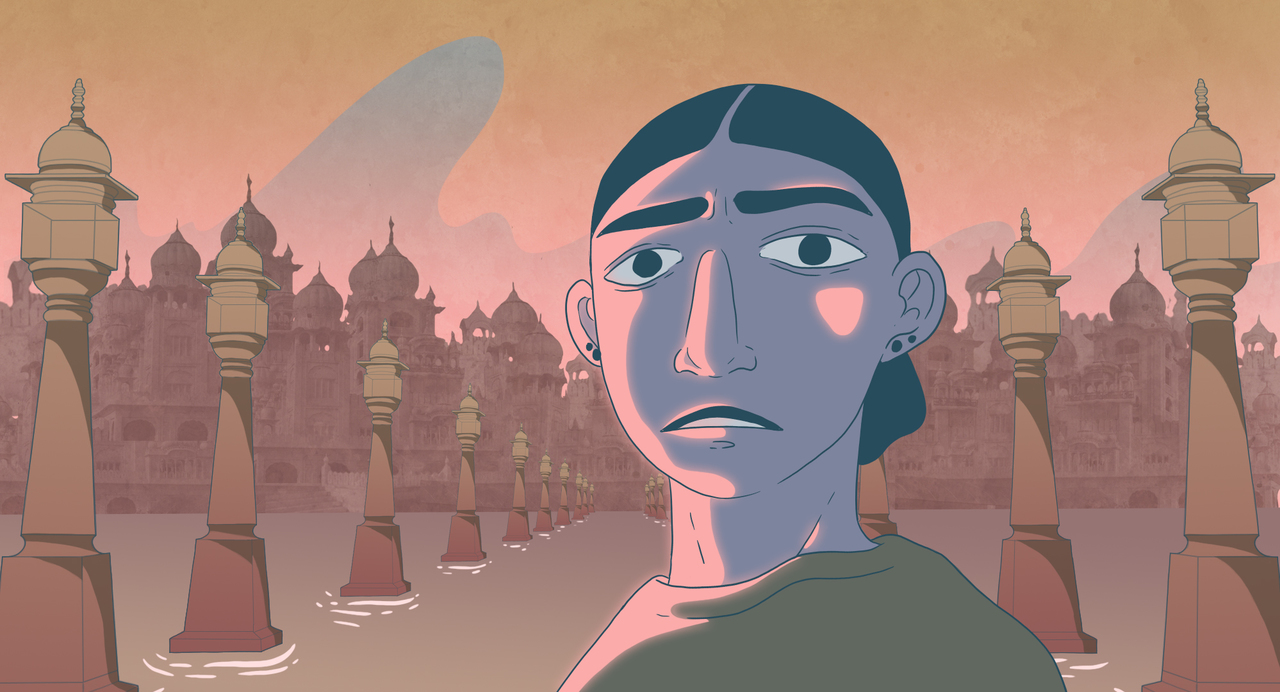
I was only able to understand the full meaning of this piece once the final caption with the end credits came up and I read that the story is based on the memories of 2 women who survived the Sikh Massacre in Delhi of 1984 (where more than 8000 people died in 3 days). Despite the strong story and some interesting visual (though not very warm, nor overwhelming), I thought the film itself was a bit too confused to carry the emotional resonance it actually needed. Unfortunately I was never quite on board with it. Here’s the trailer.


Chado (⭐️)

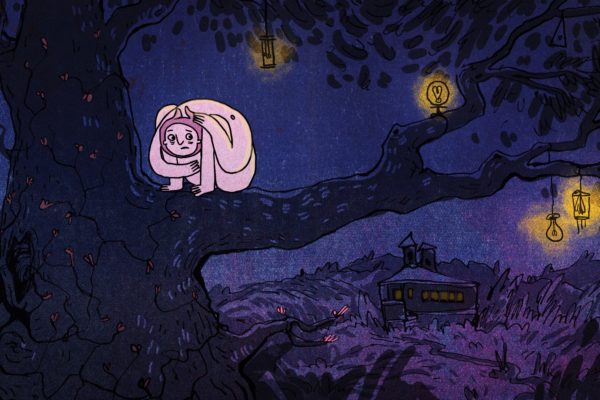
With a combination of digital animation and risograph printing the film tells a very weird story (though I am told it’s supposed to be coming of age tale… go figure) populated by even weirder characters. There are some interesting visuals here and there not enough for me to recommend it. Also I couldn’t quite understand what the two different styles were meant to diabolise and I was more confused by what the hell was going on than intrigued.


The Fire Next Time (⭐️⭐️⭐️)

Visually this was one of the most interesting of the lot, blending of hand-drawn and stop motion animation, with beautiful contrasts of colours against the gray bag rounds. It surely meant to represent an allegory for social inequality but I have to say, style aside it all felt a bit flat for me and when it finished I was left with more questions than answers and a feeling of “meh”. A pity because it had lots of potential. Here’s the trailer


The Owl and the Pussycat (⭐️⭐️)

An illustration of the 1871 poem by Edward Lear, which however charming doesn’t quite feel award material, but more like something you’d find on YouTube when looking at something for your young child to behave. Also I thought the voice for the narration was miscast and didn’t seem to fit the warmth of the rest of the film.


The Song of A Lost Boy (⭐️⭐️⭐️)

It is the story of a young choir boy whose voice breaks in the middle of singing in a church and runs away in shame.This short is beautifully photographed (the lighting in general is exceptional) but I must say I wasn’t too keen on the way the characters themselves were depicted.The story is meant represent a sort of crisis of faith and a journey to self- discovery. Probably the best of the lot, but that doesn’t say a lot .

The Truffle Hunters

The Truffle Hunters

Directors: Michael DweckGregory Kershaw. Cast: Piero BottoSergio CaudaMaria Cicciù, Carlo Gondola, Aurelio Conterno

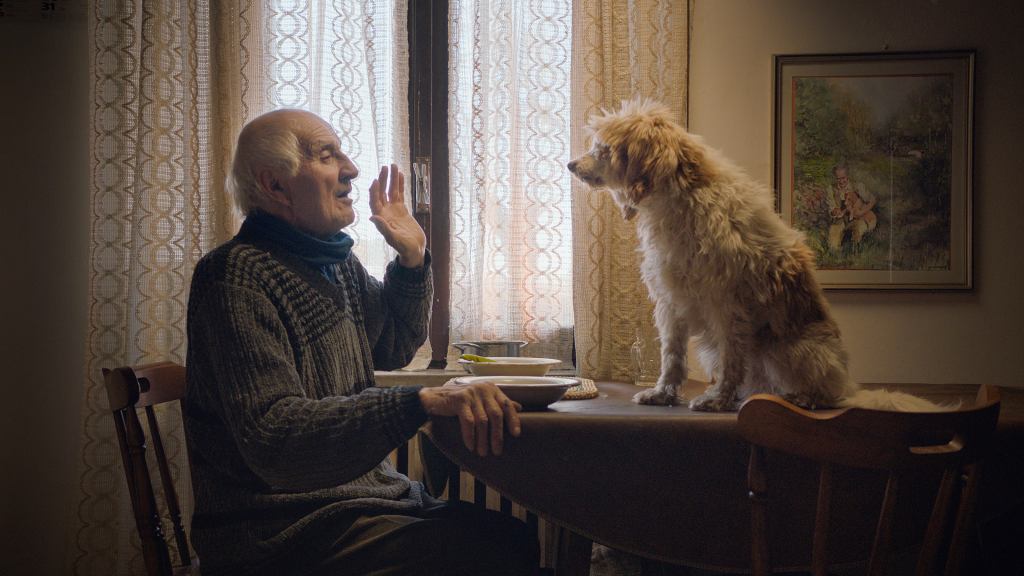
One of the most unexpected surprises in quite a while and certainly the most charming and loveliest film I’ve seen this year. On paper it had all the credential to be a snooze-fest: a documentary about old men somewhere in Piedmont in northern Italy, who spend their lives looking for truffles. Well, believe me, there’s so much more to that: Produced by Luca Guadagnino and spoken in a mixture of Italian and strict dialect (thank God for English Subtitles!), this is a portrait of old age and the acceptance of mortality, an ode to simple lives, heartwarming tales of the relationships between the old men and their dogs (the film is as much as the old met than it is about dogs: at some point a camera is strapped to one of them as for a few minutes we become the dogs, running though the woods). And then we get a glimpse of the darker side too: the viscidness that surrounds the trade beyond the actual picking of truffles (including, horror or horrors, dogs poisoned by the envious competitors), the incredible high prices of these tiny roots, and all those posh people willing to spend a fortune for a good meal. And in among all this a splendid theatre of wonderful characters, so perfect, so quirky, so sweet that they feel scripted.

Carlo and his wife in their daily routines, making wines, picking tomatoes, discussing that at 87, it’s now time he stops going out at night looking for truffles.

The beardy guy who swears a lot, disenchanted by the way the market has tainted the job. The man who has a bath with his dog and breaks down to tears as he explains to a policeman who he had 2 dogs poisoned.

And then, Aurelio, the grumpy old man, all alone with nobody to pass his mantle onto and willing to take his secrets to the grave, seemingly selfish but actually desperate to find somebody to take care of his dog as he’s becoming more and more aware of his own mortality: “I’m soon going for a long trip and I might be back” her confesses to dog.

And while all this happens the camera captures it all, in all its beauty, in simple wide shots, unobtrusive, discreet, without any edits.

Little vignettes, tantalising moments, glimpses of lives.I can see how this might not be for everyone, but if you’re willing to let yourself go and immerse yourself in the lives of these wonderful individuals you may even learn something about the beauty of a simple life.

It comes out in spring both in the US and UK.