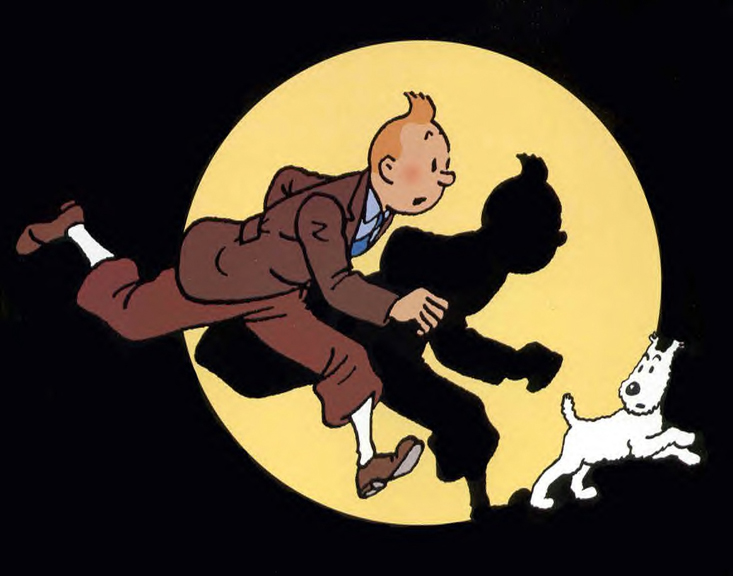
The Adventures of Tintin – Review

The Adventures of Tintin – the Secret of the Unicorn (2011)

Director: Steven Spielberg. Writers: Steven MoffatEdgar WrightJoe Cornish. Stars: Jamie BellDaniel CraigAndy SerkisNick FrostSimon Pegg 

4.0_MOVIEGEEKBLOG

I should probably tell you straight away that I have been waiting for this film for about 3 decades! Yes I know, quite a bold statement which may give away my age, but it will also tell you about my level of expectations for this film. If then you add the fact that I’ve grown up watching Spielberg movies back in his golden years (obviously I’m talking about the 80s) and that I’ve also been an avid fan of all Tintin comics ever since I was a little boy, you can probably get an idea of the kind of palpitations I had when I sat into the theatre and wore my 3D glasses. Having said all that I will still try to give an unbiased and honest review as much I possibly can, praising the (many) merits of the film but also highlighting some of the faults which in my option prevented ‘The Adventures of Tintin’ from being the masterpiece I really wanted it to be.

For a start I was very  pleased to see how respectful Spielberg was with the handling of the original material. After all, this is the man who wanted to turn Harry Potter into an American, combining several books into one (A bad, bad, bad idea Steven!). The story of this film does actually combine several of the Tintin books: ‘The Crab with the Golden Claws’ (in which Tintin befriends Haddock and saves him from smugglers) and the two-parter ‘The Secret of the Unicorn’ and ‘Red Rackham’s Treasure’ (which is the core of the film, so all the bits about the search for the lost treasure). There are also some very small elements and secondary characters from other stories too, but as far as taking liberties that’s where Spielberg stopped. Everything else is precisely how the Belgian creator, Hergé had imagined it: with that same sense of adventure, mystery, intrigue, action and fun. In other words the same mood and atmosphere that made the comics so successful  (at least in Europe) and incidentally, the same elements also at the centre of one of Spielberg’s classic, Raiders of the lost ark.  It’s not surprising that Hergé himself, after seeing that film back in 1981 thought Spielberg was the only person who could ever do Tintin justice.

Spielberg pays homage to Tintin’s creator right from the start, not just in the beautifully design title sequence (reminiscent of the one from ‘Catch Me If You Can’), where he show us so many elements from all Tintin stories, not just in the colour palette he chooses for the cinematography of the film or in the way each characters’ faces look, but he even goes as far as having Hergé himself appearing as a street artist drawing a portrait of Tintin the way we are used to see him in the comics: pure genius!

On the whole I must say that I wasn’t as bothered as I thought I was going to be by the motion capture animation. In fact you stop worrying about it about 5 minutes into the film. The characters look more cartoony than realistic and that helps getting away with the fact that their eyes (especially Tintin’s) are slightly dead. This is first and foremost still an animated film (Though bizarrely it was snubbed at the Oscars in 2012). Yes, probably they should have though about going for proper animation, ditching the motion capture, but then it would have lost something from the pure visual point of view. Becaus one thing is for sure: it does look magnificent! From the moody dark shadows, reminiscent of those film noir from the 40s, to the great vistas straight out of a David Lean classic (which Spielberg love so much) and the impeccable cinematography (Spielberg himself is even credited as Lighting Consultant) which is not just beautiful but impressive and atmospheric too.

Spielberg as a director, in his first animated venture (and his first use of 3D too!), looks like a little boy who’s just been told he can do what he wants for his birthday: he appears to be liberated from any restriction he may have had on a normal feature film and seems to have a lot of fun in finding new beautifully inventive ways to transition from one scene to the next  in a way you could only do in animation (or with a lot of very expensive CGI): Spielberg’s camera floats, glides, flies, moves through glass, shoots straight into mirrors and gives us views which would otherwise been practically impossible and yet, most of the times it’s never showy, it’s never forced or indulgent.

It’s like watching a master at work who knows exactly where the camera should be at which time. It all culminated with one of the most impressive and perfectly executed chase sequence ever portrayed on screen. Impressive not just because of its pace and its edge-of-your-seat thrills, but also for its meticulous choreography: in fact it takes place in just one impossibly-long shot, which adds to the tension and to the sense of fun. Watching it again with my son, he was on the edge of the seat watching this… and so was I. If you ever wondered why didn’t they just film the whole thing for real, this sequence alone (which by itself is worth the price of the entire ticket) should give you the answer.

I just wished that same tension and sense of fun on that sequence had been present throughout the rest of the film. Don’t get me wrong, this first adventures of Tintin is a roller coaster ride like few others. Essentially it’s one action set piece after another, and yet somehow I felt there was a strange tendency to resolve problems much too quickly. It’s almost as if Spielberg was so preoccupied to get us to the next action sequence that he almost forgot how to makes us like the one we were watching. I give you a few examples:  a chase sequence at the front of the film, ends much too soon before it has time to climax. Later on there’s a scene where Tintin has to steal a key from a bunch of sleeping goons. A lot of time is spent setting up the dangers and then just when the sequence is about to get fun, Tintin gets the key. There’s another scene where Tintin faints close to the propellers of a plane and once again he gets saved much too quickly.

Whatever happened to those classic Spielberg long action sequences that were so tense despite being so simple? I’m thinking of Indy trying to get the antidote to the poison he’s just drunk as the little bottle gets kicked around a room full of screaming people in the Temple of Doom, or fight sequence by the plane in Raiders (and the truck chase in the same film), or even the glass breaking sequence in the otherwise weak Lost World? (In fact they are too many to even mention).

The pace of ‘Tintin’ is strange and a bit uneven too. It has moments of long exposition (this is a fault that comes with the source material to be completely fair, but I must say the script doesn’t really help) and I found the story is needlessly convoluted for the type of thing it was and a lot of the plot point were spoken out more than shown. And then in between those more ploy bits, a whole lots of little short action scenes (as I said, slightly too short to feel important). I would have rather had fewer set pieces but longer in their execution. Ands then at time they even felt somehow anticlimactic (I’m thinking of the last 10 minutes of the film for example: the ending did feel very much like a letdown).

I  am probably picking needles here mainly because, as I said before, I love these stories (and the story-teller) way too much and I really wanted this to be perfect.

The comedy aspect of the film is a bit of a hit and miss too: the Inspector Thompson and Thomson are obviously aimed at the younger crowd, but they’re also the weakest characters (we had a glimpse of that in the trailer itself, as one of them falls off the stairs: a scene which in the theatre where I was, full of kids, was received with dead silence), on the other hand Captain Haddock is perfect. I don’t know whether it’s the script, or Andy Serkis’s performance or both, but most of the jokes around him seem to work perfectly. Same goes for the little dog Snowy who is in almost every scene of the film (even if just in the background licking a massive bone in the desert) but steals the show almost every time.

And finally Tintin himself which in this whole 3D world is probably the most two-dimensional character. Aside from the fact that he seems to get a kick out of solving puzzles and getting into adventures, we know very little about him. I’m not really blaming Spielberg for that, this exactly how Tintin was in the comics, but I do wonder if some character development would have been really seen as sacrilegious by the hard-code fans, or it actually would have helped a bit.

Finally I feel I should say a few words about John Williams score, the first one in years. There’s a very quirky and weird jazzy title music (which never really seem to play out throughout the rest of the film) which is the most un-Wiliamesque theme in a while. It certainly was not bad, but it feels slightly detached from the rest of the film. The Star Wars title music was never repeated throughout the movies either, and yet it felt part of the score. This title music here felt like it belonged to can other film (in fact it felt like a recycled cue from “catch me if you can”). It’s hard to review the score, because for most of the film I felt it never really had the time to breathe as much as it should have. The comic cues suffered more than others (the ones for the Inspectors for example), as they were covered by the dialogue and the rest of the sound effects to the point where I even wondered whether any music was needed at all (probably they felt they did need it, to help make it slightly funnier).

Funny how, on one hand there was definitely way too much music in the film (in fact there was hardly a moment without) and yet on the other it had very little time to shine. Having said that, I was still able to hum some of the Tintin action tunes after watching it… and that’s always a good sign.

To recap, this is a solid action-packed fun-ride for the whole family which is not as loud, dumb and insulting as some of those Pirates of the Caribbean films were. It’s proper film-making, even if in animation form, with its heart in the right place, arching back to the original source and to the Indiana Jones-like adventure we all love so much.

4/5

Check out my other reviews of movies by Spielberg: Raiders of the lost art, ET The Extra-Terrestrial, War Horse
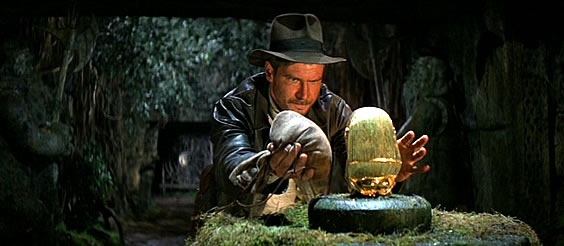

Raiders of the Lost Ark – 30th anniversary Review

Raiders of the Lost Ark (1981) 

Directed by Steven Spielberg. Starring Harrison FordKaren AllenPaul Freeman

Call me childish, call me narrow-minded, call me a “blockbuster-junkie”, call whatever-you-want, but to me this is the perfect film!

Such a bold statement might require some explanation (which hopefully I will be able to give in this post) and certainly begs the question: what makes a film perfect? And, is this really one?

The answer to the second question is a simple and resounding YES.

I believe a perfect film is one that can be watched over and over again: a film that you never grow tired of and that whenever is on TV and you stumble across it, you end up watching. A perfect film is one of those where you struggle to pick up one favorite scene, because they’re all so good. A perfect film is one of those you really wouldn’t change anything about it and where all its elements (story, direction, acting, music, cinematography, editing and so on) come together in a such a way that it’s virtually impossible to choose one over the other.

Raiders of the lost Ark is 30 years old this month, but still shines as if it were made yesterday… except that it wasn’t because, as we all know “they don’t make them like this anymore“.

I still remember going to the movie theatre when it first got released (Yes, I’m giving away my age: clearly I’m not a teenager!) and being absolutely blown away by it. At the time there was nothing like it  (and arguably, that’s probably still true today).

Ever since then people have been trying to  imitate its winning formula, and, needless to say, most of them failed miserably. Just to give you an idea of what I am talking about (and to prove my point), just think of Lara Croft, Prince of Persia, National treasure, The Mummy Trilogy and even those films inspired by the Dan Brown‘s books: well, those are the most successful ones… Enough said. I won’t even go into the list of endless B-movies.

I find quite hard to write about “Raiders”, mainly because I’ve seen it so many times and I know so much about it, that I almost feel compelled to write every single details filling up pages and pages… But don’t worry, I won’t.

Right from the word “go”, from when the summit of the Paramount logo dissolves into a Peruvian mountain (a Visual device which will become the trademark of the entire series), you know you’re in for something which is not only original but clever and handsomely made.

What follows that logo is probably one of the best first sequences of any action movies ever made. The mysterious forest, the haunting music, the bloody  statue, the group of explorers, the old map, the hidden cave, the pulsating tension, the crawling spiders, the giant web, the deadly traps, the decomposed body, the big scares, the golden idol, the sliding  door, the traitor, the whip,  the rolling boulder, the French baddie, the wild Hovitos, the arrows, the chase across the fields, the swinging vine, John Williams‘s “raiders theme”, the snake on the plane, the jokes breaking the tension: and all this is just within the first 10 minutes!!! It is such an incredible edge-of-your-seat beginning that after that the film can afford to launch into a very long scene with some massive exposition

And I haven’t even mentioned the hero himself, Indiana Jones.

Harrison Ford deserves a lot of credits for the success of this film. Who knows what would have happened if Tom Selleck had played the role: he was the first choice, after all (I will be eternally grateful to Magnum PI).

Harrison Ford manages to make Indiana Jones strong and frail at the same time, funny and sad, invincible and weak. Indy is a hero but he gets hurt, tired, dirty and sweaty. It doesn’t matter how far-fetched and over-the-top the action might be, Ford makes it feel real.

Spielberg directs it all with clockwork perfection but he’s also able to improvise on the spot and use it all to his advantage (most famously, the now-classic scene where Indy shoots the sword-man, which as we all know by now, was pretty much improvised on the spot). He orchestrates it all with a mastery that’s never showy and always serving the story and the action as he uses all the tricks in the film-maker book: long lens shots during a chase sequence, a tracking shot across the desert to show the scale of the landscape, a single one-take shot during a drinking competition.

He also knows exactly how to pitch the film: helped by a carefully crafted script, all the improbabilities are always levelled by humour, the action is always counter-balanced by actual dramatic scenes, the magical sense of wonder is always routed to reality and however cartoony some of the characters might be, they’re always incredibly detailed.

Paul Freeman‘s Belloq is not just a baddie. There’s so much more to him: the care and attention he has for Marion, and whole untold back-story and a passion for archeology he shares with Indy are enough to give him more depth and somehow make him more scary. He also gets one of the best lines in the film: “we are only passing though history, this… this IS history”

What started off as a tribute to those Action Saturday Matinee that Spielberg and Lucas loved so much, here becomes a rollercoaster of sheer invention, cracking action and incredible fun. So many scenes are now become classic iconic moments in movie history, whether it’s to do with snakes in  “well of Souls”, or ghost-like creatures during the opening of the ark, running though the streets of Cairo, or fighting with a bald guy by a plane out of control, in a secret chamber underground, or in a massive warehouse with thousands and thousands crates (incidentally, one of the best “last shots” of any movie!!).

This is so much more than just pure escapism: this is a manual of “storytelling with pictures”.

10/10 

Here’s there’s a great fan-made running-commentary of the film. A real work of genius and love for the film made with great care and attention. Well done Jamie!

Raiding The Lost Ark: A Filmumentary By Jamie Benning on Vimeo.

Stand By Me – Review

Stand By Me (1986) 

Directed by Rob Reiner. Starring Wil WheatonRiver PhoenixCorey FeldmanJerry O’ConnellKiefer SutherlandRichard Dreyfuss.

I find incredibly difficult to review “Stand By Me” without being completely biased and detached, the way a real film critic should be. But then again, I am not a real film critic, I’m just a film lover (and a geek, of course!) and most of the times my response to a film is an emotional one: if it makes me laugh or cry or think, then it means that it worked on me; but if it makes me laugh and cry and think, then there is something more to it too!

Basically let me just tell you upfront: I adore this film!

I could recite it by heart and I’ve seen it more times that I care to admit, but since this week it’s its 33rd anniversary (JESUS, where has time gone!?), and I’m being bombarded left and right by articles and reminders about it, and since I am way too tired to watch anything else, I’ve decided to put it on again…  And you know what? It still works.

The word classic gets over-used these days. Any anniversary is an excuse to re-release any piece of junk that’s more than 20 years old. Most of those films carry that cheesy sense of nostalgia for the 80s, and that’s sometimes enough for them to appropriate a cult status. But when you look at them closely, you’ll find that they have aged quite badly, either technically (terrible matte paintings, visual effects or synthesized music) or stylistically (Their look, the clothes and the hairstyles people are wearing and the corny dialogue nobody seemed to mind so much at the time).

However “Stand by me” has the advantage of being a period piece (It is set in 1959) and its simple, subtle and honest depiction of the 60s not only hides away the cheesiness of the 80s but also adds a sense of timelessness to it. The film is 33 years old, but it could just as well be 35 or 45 … and yet it still relates all of us as if it was made yesterday…

I loved it at the time, for its sheer sense of fun, adventure and mischief and I love it today for its poignant look at the way we were… or rather the way I was. A childhood, so far gone but never forgotten.

It’s the ultimate coming of age story, set in the hazy, warm, sunny and dreamy landscape of Oregon, as 4 friends set out on a journey along the railway tracks, looking for the body of a missing boy.

The film is adapted by a short novel by Stephen King, from the book “Four Seasons” (The Shawshank Redemption was also adapted from the same book) and like all the best tales from King, finds its strength in the way the characters are fleshed out: rarely have teenagers so very well depicted like in “Stand by Me”. The contrast between the way they try to act as adults in front of each other, by smoking or swearing (“Go get the food, you morphodite”) and the way they reveal their real age by talking about the most childish and mundane things and yet making them sound profound and meaningful (MightyMouse is a cartoon. Superman’s a real guy!).

Behind all that, there’s a pure, sincere and real sense of friendship that permeates the whole film.

That line at the end on that computer screen “I never had friends like the ones I had when I was 12. Jesus, does anyone?” resonates in all of us and it’s one of the most poignant and truthful line I can remember in any film.

The interaction between the four young actors is the real power of “Stand By Me”: never for a moment you think they might be acting. Will Wheaton’s take as the sensitive Gordie is impeccable. The way he pauses before delivering his lines, how he smiles and looks at his best friends, how he proudly tells them the story of Lard-Ass, how he breaks down into tears at the sudden realization that his parents might hate him and finally how coldly threatens Kiefer Sutherland‘s terrifying bully, without even flinching (suck my fat one, you cheap die store hood!).

Both Corey Feldman and Jerry O’Connell are also spot on in their roles, bringing not only that amount of comic relief needed but also that sense of playfulness that kids at that age have (I don’t shut up I grow up, and when I look at you I throw up!)

But ultimately it’s River Phoenix that steals the show. The poignancy and sincerity he brings to the role of Chris Chambers is even more enhanced today by the ending of the film and as we see him fading away in the distance and we’re just left with a sour taste of what an incredible actor he could have become.

Beautifully photographed, as seen from the dreamy eyes of an adult (in this case Richard Dreyfuss) who’s obviously very fond of those memories, the film is also accompanied by the most wonderful soundtrack, a mixture of hits from the time, perfectly integrated into the film (like the moment the kids break into signing “lollipop“) and the actual score made up with a subtle slowed down version of the “Stand By Me” itself by Ben E.King

This film is a real little gem , a small masterpiece, dare_I-say, that works because of its charming and honest simplicity. You could easily argue against some of the clichés and the non-very-subtle depiction of Gordie’s family and the ever-too-perfect-dead-older-brother or obvious lines like “The town seemed different: smaller“, but it would be like arguing that Snow-White is a two-dimensional character, or that Nurse Ratched in “One Flew Over the cuckoos’ Nest” is an unbelievable bitch: basically it would be pointless.

Reiner’s  delicate touch seems effortless and invisible, but his imprint is all over this film. The man after all is a genius and every genre he touches turns to gold. Whether mokumentary (this is spinal Tap), Fantasy/Adventure “The Princess Bride”, Romantic comedy (“When Harry Met Sally”), Psychological horror (Misery), CourtRoom Drama (A Few Good Men).

And now this: a true undeniable classic, a nostalgic look at the way we were, in a time of innocence when friendship really meant something and when the most important question was “if Mickey’s a mouse, Donald’s a duck, Pluto’s a dog. What’s Goofy?

5/5

If you Agree, or disagree, do let me know and leave me a message.

If you enjoy this review, do leave a message (… Actually I guess you should leave one even if you didn’t…)

Barney’s Version – Review

Barney’s Version 

Directed by Richard J. Lewis. Starring Paul GiamattiMacha GrenonPaul GrossDustin HoffmanMinnie Driver.

This is a very unusual film which took me completely by surprise. About 1 hour into it I was actually ready to hate it. Then something must have happened about half way through because slowly (maybe too slowly) what was up until that point just an average comedy, turned into something quite different: a touching story, with a very powerful ending which I am sure will stay with me for quite a while.

Paul Giamatti is the real strength of “Barney’s Version”, a film which otherwise would have become a fairly forgettable ride. He somehow manages to turn the part of the obnoxious, hard-drinking, cigar-smoking, foul-mouthed, hypocrite and quite repellent television producer, Barney Panofsky, into a moving character right at the end, just when you’re ready to dismiss him. This is certainly one of the best performances of Giamatti’s career (and that says a lot, since he’s always been very good).

Having said this, 132 minutes spent in the company of someone like Barney who is so focused on himself, so smug would stretch anyone’s patience.

His actual character is virtually impossible to comprehend and in the end, despite being present for pretty much every single scene in the film,  he does remain a mystery (and i don’t mean it as a compliment). This is certainly not Giamatti’s fault but a combination of the script (adapted from a novel by the Canadian Mordecai Richler) and a bland direction (unsurprisingly Richard J. Lewis comes from TV from things like CSI, makes no attempt to bring any style or pace to the film).

The main problem, length aside, is that you never quite believe why so many attractive women could fall in love for the sweaty, drunken Barney. And yet, he does get married 3 times and has constant flings everywhere else too. At some point I even wondered whether Giamatti was really the best choice for this story (though he is so good that he almost gets away with it).

The whole first part of the film is probably the weakest. It is fairly episodic and tries too hard to be a comedy without being funny enough. There are too many subplots which feel too random and disjointed but also there are way too many supporting characters, most whom might have played better in the novel, but here they all feel too much like caricatures (the father in law, Minnie Driver and Dustin Hoffman among many), as the film barely scratches their surface.

Then, about 1 hour into the film, something quite big happens (I won’t tell you what it is, don’t worry) and from there onwards the film finally seemed to find its way and became more focused.

Rosamunda Pike enters the film  and the relationship between her and Giamatti takes the centre stage. I have  never been really crazy about Rosamunda Pyke, but in this film she’s really good and she definitely plays one of the her best part.

Slowly the film settles into what it really should have been from the beginning, a slightly more poignant and focused film about a guy feeling the weight of the guilt and regrets for the life he’s spent. The last act is heart-wrenching and probably the most original part of the film. Some people may find it a bit too heavy handled, especially since our emotional investment in the main character has been somewhat limited by his awful persona.

It really worked on me but I can see how somebody could argue it’s rather manipulative.

On a separate note, there some in-jokes cameo appearances by some of Canada’s most notable directors, for diehard movie geeks out there: these are mainly people who have worked for producer Robert Lantos (producer of Eastern Promises). Even David Cronenberg and Atom Egoyan also turn up as directors of Barney’s TV show.

6.5/10

Alice in Wonderland – Review

ALICE IN WONDERLAND (2010) 

Directed by Tim Burton. Starring Johnny DeppMia WasikowskaHelena Bonham Carter

On paper this movie is something which had all the potential to be the movie of the year: Tim Burton’s visionary genius re-imagining one of the most fantastic and imaginative stories ever.  Helena Bonham Carter as the Red Queen. Mia Wasikowska (from the wonderful “In Treatment”) as Alice herself. Special Effects extravaganza in 3D. And a never-ending list of great actors and  actresses lending their voices to all those loved characters from our childhood. I would have said “count me in!” anytime!!! And yet, this ended up to be possibly the biggest turkey of the year!

It’s not really an awful film, but knowing what this could have been like, it just leaves you really disappointed.

How could it have happened?

In a way it reminded me of Steven’s Spielberg’s Hook, one the (few) big missteps of his career. In that movie too Spielberg had made the terrible mistake of messing with a classic story: for example we had a grown up Peter Pan going back to Neverland. Here Alice has grown up too and forgot everything about Wonderland which is now a run down place with a Gothic feel, typical of any Tim Burton’s movie. Well, that would probably be all right, except that Burton, by updating the world really managed to take the wonder out of “Wonderland”.

Tim Burton’s film is essentially a sequel/re-imagining of the Lewis Carroll without all the joyful surprises, the sense of discovery and  fun of that book and more crucially, without a single good original idea! None of the liberties the makers took seems to work culminating with fight scene with a dragon at the end  of the end which seems to belong to a different film altogether. And (big spoiler here… watch out) what’s point of all that going to China at the end? What a mess!

There was another Disney’s movie back in the 80s called Return to Oz, which made the same mistake and used the same device of having Dorothy going back to Oz only to find it all changed and half-destroyed and now look almost like a kind of post-apocalyptic landscape where everything seem to be covered in ash. However in that film the story and the characters were so compelling that somehow they got a way with it, in Burton’s Alice in Wonderland all the characters are so annoying and only just half-sketched that it’s hard to care about any of them. In fact it seems like their accents, make up  and CGI enhancements have replaced their personalities.

Michael Sheen‘s White Rabbit appears a couple of times and is probably the most confusing of them all, since it relies on your knowledge of the character from the previous incarnation of the story to make any sense of it. Where is he going? Why is there at all? What’s his point? is he there to help Alice or the Queen? Stephen Fry‘s Cheshire Cat and  Alan Rickman‘s Blue Caterpillar are just as superfluous to the story. Once again, it all feels rather over-blown, over-crowded with characters.

And finally Johnny Depp who’s impersonation of the Mad Hatter is the most annoying of them all and possibly one of the actor’s worse performance of his career . Now, I really used to like Johnny Depp, but it seems that in the last few years he’s only been playing the same over-the-top character over and over again. His Mad Hatter seems an extension and a mixture of his previous “mad characters”: there’s a little bit  from Tim Burton’s previous creations, from Willy Wonka in Chocolate Factory,  to Sweeney Todd and even his previous Edward Scissorhands but there’s also lots of reminders to Jack Sparrow from the Pirates of the Caribbean movies, and hints from The Imaginarium of Doctor Parnassus and Fear and Loathing in Las Vegas. Is Johnny Depp playing the same character over and over again? What happened to the sweet, restrained and understated performances of his early work like the beautiful What’s Eating Gilbert Grape and Donnie Brasco? And most awful of them all Anne Hathaway‘s take of White Queen, who’s mannerism is just as annoying as her eyebrow. It might have been all intentional (in which case, even worse) but it was certainly a very bad choice to have her acting like that.

Helena Bonham Carter‘s impersonation of the Red Queen is one of the few redeeming factor in the whole film and the scenes with her are probably the highlights in an otherwise flat and misjudged series of sequences. Though even her bizarre creation becomes a bit tedious after a while.

Even the special effects (which by themselves are top class) are so diluted in the poor story that somehow failed to strike a chord and surprise us. Not to mention the use of the 3D which is probably one of the poorest use of it I’ve seen this year (together with “Clash of the Titans”). I guess it has to do with the fact that the movie was actually filmed on 2D and then retrofitted (I am not quite sure whether this is the right term for it) afterwards. This is a technique that not only doesn’t work but also brings a bad reputation to 3D itself (I keep on hearing a lot of people complaining about how bad 3D is, but they’ve only seen Clash of the Titans of Alice in Wonderland,  and they believe that’s what 3D really is).

Just a quick word about the music score: yes, it could have been good, if only they had work out where to use it, as opposed to ending up having music throughout the whole film, thus diminishing the effect that music should have. Overblown is once again the word that comes to mind.

I wonder what this film could have been like if maybe Tim Burton had made it, without Disney behind his shoulders. But as it is, on the whole, this mish-mash of Disney and Burton doesn’t really hold together and it proves once again that Tim Burton is the “director-that-could-be-great-but-rarely-really-is”.

5.5/10

OTHER RELATED REVIEWS (or, you’d better watch something else, instead of this)

Toy Story 3

Tron: Legacy

Back to the Future