A Dangerous Method – Review

A Dangerous Method (2011) 

Directed by: David Cronenberg. Written by: Christopher Hampton. Starring Michael FassbenderKeira KnightleyViggo Mortensen.

I can’t remember the last time when I have been so much in disagreement with the general critical response for a movie… Everywhere I look I seem to hear and read high praises for Cronenberg’s latest work, and yet I am willing to bet that few of those who claimed to like it so much would be ready to watch it again. As far as I am concerned I am struggling to find something positive to say (well, yes, nice costumes…) and the only reason why my vote isn’t any lower is because I am willing to admit that I might have not been in the right mood for it.

Even in his most flawed films, Cronenberg has always been an interesting director, or at least able to create not only an almost palpable atmosphere, but also a particularly defined style and vision which set him apart from the usual Hollywood crowd.

And yet this one seems a film with no direction whatsoever. Not only each sequence felt random and inconsequential as if not necessarily edited in the right order, without any real feeling of natural progression from the previous one into the next, but also it was all so static and lifeless that sometimes I even wondered whether anyone was actually directing at all. At no point I felt any sympathy for any of the character: in fact, not only I did not like any of them, but I didn’t even hate them either. I just didn’t care.

And this is is a rather strange thing to say, because on paper, a film about the relationship between Carl Jung and Sigmund Freud (and consequently the birth of psychoanalysis) sounded to me very intriguing indeed. Sadly, pretty earlier on into “A dangerous Method” I realised that this wasn’t really the type of film I was hoping to see.

I found myself uneasy right from the word “go”, that is from the moment I saw Keira Knightley overacting like never before and stretching her chin to new unbelievable levels, as if screaming to the audience “I want that Oscar!!”. Well, darling, not this time.

Then, after the early screams, it all calmed down a bit and the dialogue started… and that’s when it got worse! For a film which should rely on words more than action itself (especially given the static nature of it all), I found the script absolutely puerile. It all felt like it was written by a high school kid, who’s just heard a few things about Freud and wants to impress his friend with his newly acquired knowledge. I mean, there are actually lines like “You Freud, have always sex in your mind. Why does everything always has to do with sex?”!  Really? Mr Hampton, who are you writing this script for? Surely your target audience doesn’t need things spell out so boldly and blatantly.

It was like reading a checklist of all the possible clichés one could think about psychoanalysis (and Freud in particular). Who is this film for anyway? At times it felt like it was so ridiculously basic, as if it was written for people who have never even heard of Freud and Jung. Other times it was all so ridden with heavy handed quotes and so “up its own self” that it felt like watching some boring lecture given by an even more bored teacher, sitting on your old desk back in school. From such a renowned scriptwriter (he wrote Dangerous Liaisons and Atonement among the other things) I was expecting a lot more: maybe Mr Hampton should watch a few episodes of HBO’s classy “In Treatment” to learn a thing of two about the subtlety of bringing psychoanalysis to the screen.

As far as the two leading male actors (Fassbender and Mortensen, who by the way was so good in both Cronenberg “A History of Violence” and “Eastern Promises”), they were as good as they could possibly be, but in the end they both failed to impress, move, or even raise any sort of emotion beyond boredom. But then again, that’s hardly surprising given both the script they were actually given and a clear lack of any direction, which forced them to talk at each other in the most contrived scenes and badly staged, where even the extras in the background seemed fake and moved slowly and gently like… erm…well, extras (particularly noticeable in the scene by the river).

Sorry David, not this time for me.

5/10

Young Adult – Review

YOUNG ADULT (2011)

Directed by Jason Reitman. Written by Diablo Cody. Starring Charlize Theron, Patrick Wilson, Patton Oswalt.

After the massive success of Juno, director Jason Reitman and writer Diablo Cody team up again, this time focusing their attention, not on a pregnant teenager (Juno) or a middle-aged lonely traveller (up in the Air), but on one the most dislikeable character you can think of.

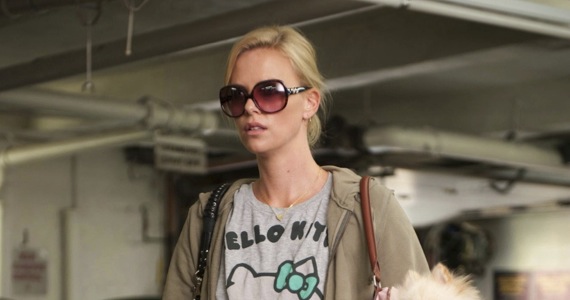
Charlize Theron basically plays a narcissistic bitch, Mavis Gary, who heads back to her small hometown with the only intention to reclaim the heart of her high school flame (Patrick Wilson) despite the fact that he’s now happily married with a newly born baby.

Of course movie history is full of great awful lead characters (think of Goodfellas, just to mention one). A good story doesn’t necessarily has to have somebody you like to be appreciated, and you don’t really need to identify with a lead character to enjoy a movie… However, be aware it may end up testing your patience unless it’s all exceptionally grabby… and that’s exactly what happened to me watching this film. Charlize might be one of the most stunningly beautiful actress of our time, but her character Mavis is really not a nice person at all…

Diablo Cody said she’s based the character on herself… a bold statement which makes me like her less and less: let’s just hope she was exaggerating… Mavis is selfish, obnoxious, irritating, insensitive, and basically just not very good with people: eventually she ends up hurting not just her friends, but her family… and even her dog, but most importantly herself.

The film is intentionally uncomfortable, unconventional and quite low-key, but however brave is the attempt from both the screenplay and the direction to avoid any sugary redemption story (something which has been much criticised in the previous “Up in the Air” for example), and a typical Hollywood construction, the film is in the end rather inconclusive.

We never really get a grip on Mavis. And when we finally do, since we never really liked her that much, we just do not feel enough empathy or pain or sorrow or even curiosity for what she did or what she’s going to do. In other words, we don’t care (or at least I didn’t). Eventually all we are left it is just a good performance by Charlize Theron, but then again, after her amazing turn in Monster in 2003, she’s got nothing more to prove to me.

Once again she didn’t settle for an easy part and she certainly managed to give enough depth to a character which otherwise would have been a bit of a caricature, but despite all that, “Young Adult” never really took off for me.

It is on the whole a fairly predictable film which moves a very constant pace towards a pretty obvious (though masked as unconventional) conclusion.

In the end it all feels rather pointless. Of course, you may argue that such is real life: journeys of discoveries and redemption are true only in Hollywood movies and this wants to be different. Well, it certainly succeeds in that: it is different. This isn’t the feel-good movie that “Juno” was (and I’m fine with that), nor it is as quirky, fresh and surprising as “Up in the Air” was. It is probably a much more mature effort and a lot braver, but all that doesn’t necessarily make it a great film. In the end there was just to little in it.

I’m happy I saw it, but I don’t think I will want to watch it again and I’m sure once the awards buzz fades out the film will actually disappear with it.

6/10

The Ides of March – Review

The Ides of March (2011)

Directed by George Clooney. Starring Ryan GoslingPaul GiamattiGeorge ClooneyPhilip Seymour Hoffman

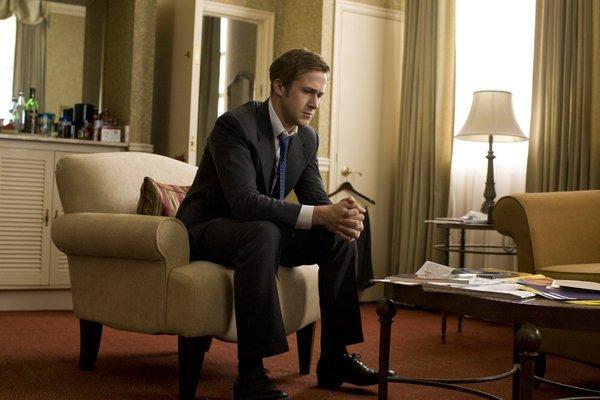
As many before me have pointed out, this film is clearly an early Oscar bait for the forthcoming awards season: it’s slick, handsome, subtle and has some great performances all around.

As a massive fan of the West Wing and political dramas in general, I was always going to like a film that takes place behind the scenes of a political campaign to elect a candidate at the US primaries. But on the other hand, maybe because of my knowledge of the genre, I couldn’t help feeling a certain sense of déjàvu in the depiction of both the plot and the types of characters. Yes, politicians are double-faced, scheming, deceiving, fast talking… This is an immature democracy soaked in disappointments and yet at the same time in colourful optimistic rhetoric.

We’ve seen most of this before, but despite its unremarkable familiar atmosphere, the film looks and feels so good and has enough confidence and tension to keep you thrilled throughout. And just when you’re about to think “this might be a tiny bit slow”, it pulls off a couple of truly unexpected twists and turns it from a political drama into a pulsating thriller. I must confess, at one point I was literally lost as to where it was all heading to.

Clooney co-wrote it, directed it and stars in it too. As a the man behind the camera, he handles it all with great subtlety and films it more as a theatre play, relying on the skills of his actors rather than big actions scenes, or car chases and shootouts. As the man in front of the camera, he takes a step back from the central stage and lets Gosling and the rest of his might cast to do most of the work.

Ryan Gosling in his third movie in a row in little more than a month confirms himself as the actor of the year: his performance is perfectly pitched: strong, charismatic and clever in a way that makes it very easy to like and identify with, despite the weaknesses and darker shades of his character. Paul Giamatti and Philip Seymour Hoffman, unsurprisingly, are perfect as always and Evan Rachel Wood and Marisa Tomei both shine in their limited supporting roles.

In the end Clooney might have more chances at the Oscar with his wonderful performance in the “Descendants” coming out soon (which I’ll be reviewing next), and anyway it’s probably a bit too early to make any Oscar predictions (will people still remember this film next February? I can hardly remember it after just a few days…), but this is still a solid political/thriller of the caliber we don’t get many these days, which treats its audience as thinking human beings capable of actually following a plot without the need to spell it out right from the title itself.

7.5/10

The Adventures of Tintin – Review

The Adventures of Tintin – the Secret of the Unicorn (2011)

Director: Steven Spielberg. Writers: Steven MoffatEdgar WrightJoe Cornish. Stars: Jamie BellDaniel CraigAndy SerkisNick FrostSimon Pegg 

4.0_MOVIEGEEKBLOG

I should probably tell you straight away that I have been waiting for this film for about 3 decades! Yes I know, quite a bold statement which may give away my age, but it will also tell you about my level of expectations for this film. If then you add the fact that I’ve grown up watching Spielberg movies back in his golden years (obviously I’m talking about the 80s) and that I’ve also been an avid fan of all Tintin comics ever since I was a little boy, you can probably get an idea of the kind of palpitations I had when I sat into the theatre and wore my 3D glasses. Having said all that I will still try to give an unbiased and honest review as much I possibly can, praising the (many) merits of the film but also highlighting some of the faults which in my option prevented ‘The Adventures of Tintin’ from being the masterpiece I really wanted it to be.

For a start I was very  pleased to see how respectful Spielberg was with the handling of the original material. After all, this is the man who wanted to turn Harry Potter into an American, combining several books into one (A bad, bad, bad idea Steven!). The story of this film does actually combine several of the Tintin books: ‘The Crab with the Golden Claws’ (in which Tintin befriends Haddock and saves him from smugglers) and the two-parter ‘The Secret of the Unicorn’ and ‘Red Rackham’s Treasure’ (which is the core of the film, so all the bits about the search for the lost treasure). There are also some very small elements and secondary characters from other stories too, but as far as taking liberties that’s where Spielberg stopped. Everything else is precisely how the Belgian creator, Hergé had imagined it: with that same sense of adventure, mystery, intrigue, action and fun. In other words the same mood and atmosphere that made the comics so successful  (at least in Europe) and incidentally, the same elements also at the centre of one of Spielberg’s classic, Raiders of the lost ark.  It’s not surprising that Hergé himself, after seeing that film back in 1981 thought Spielberg was the only person who could ever do Tintin justice.

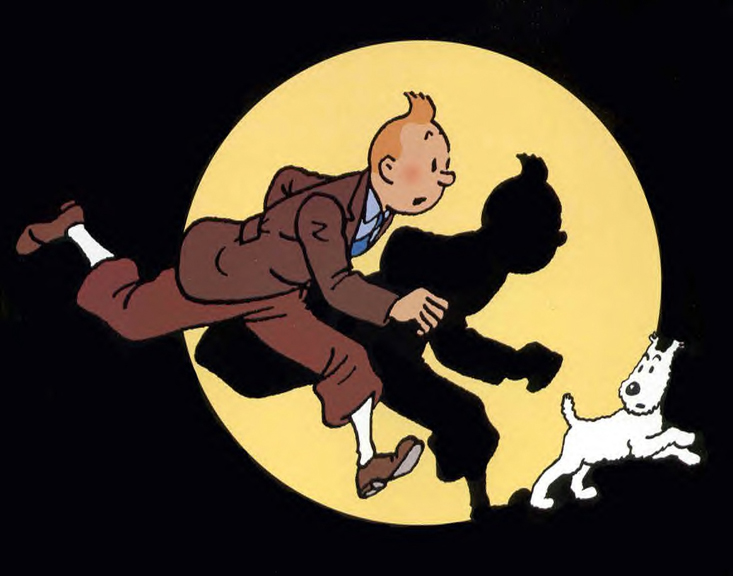
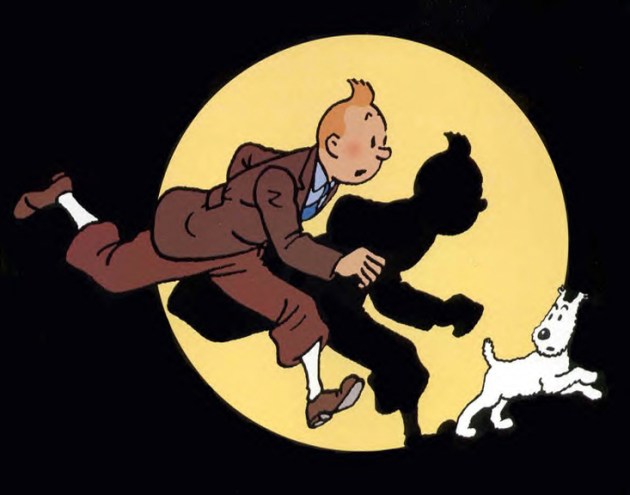
Spielberg pays homage to Tintin’s creator right from the start, not just in the beautifully design title sequence (reminiscent of the one from ‘Catch Me If You Can’), where he show us so many elements from all Tintin stories, not just in the colour palette he chooses for the cinematography of the film or in the way each characters’ faces look, but he even goes as far as having Hergé himself appearing as a street artist drawing a portrait of Tintin the way we are used to see him in the comics: pure genius!

On the whole I must say that I wasn’t as bothered as I thought I was going to be by the motion capture animation. In fact you stop worrying about it about 5 minutes into the film. The characters look more cartoony than realistic and that helps getting away with the fact that their eyes (especially Tintin’s) are slightly dead. This is first and foremost still an animated film (Though bizarrely it was snubbed at the Oscars in 2012). Yes, probably they should have though about going for proper animation, ditching the motion capture, but then it would have lost something from the pure visual point of view. Becaus one thing is for sure: it does look magnificent! From the moody dark shadows, reminiscent of those film noir from the 40s, to the great vistas straight out of a David Lean classic (which Spielberg love so much) and the impeccable cinematography (Spielberg himself is even credited as Lighting Consultant) which is not just beautiful but impressive and atmospheric too.

Spielberg as a director, in his first animated venture (and his first use of 3D too!), looks like a little boy who’s just been told he can do what he wants for his birthday: he appears to be liberated from any restriction he may have had on a normal feature film and seems to have a lot of fun in finding new beautifully inventive ways to transition from one scene to the next  in a way you could only do in animation (or with a lot of very expensive CGI): Spielberg’s camera floats, glides, flies, moves through glass, shoots straight into mirrors and gives us views which would otherwise been practically impossible and yet, most of the times it’s never showy, it’s never forced or indulgent.

It’s like watching a master at work who knows exactly where the camera should be at which time. It all culminated with one of the most impressive and perfectly executed chase sequence ever portrayed on screen. Impressive not just because of its pace and its edge-of-your-seat thrills, but also for its meticulous choreography: in fact it takes place in just one impossibly-long shot, which adds to the tension and to the sense of fun. Watching it again with my son, he was on the edge of the seat watching this… and so was I. If you ever wondered why didn’t they just film the whole thing for real, this sequence alone (which by itself is worth the price of the entire ticket) should give you the answer.

I just wished that same tension and sense of fun on that sequence had been present throughout the rest of the film. Don’t get me wrong, this first adventures of Tintin is a roller coaster ride like few others. Essentially it’s one action set piece after another, and yet somehow I felt there was a strange tendency to resolve problems much too quickly. It’s almost as if Spielberg was so preoccupied to get us to the next action sequence that he almost forgot how to makes us like the one we were watching. I give you a few examples:  a chase sequence at the front of the film, ends much too soon before it has time to climax. Later on there’s a scene where Tintin has to steal a key from a bunch of sleeping goons. A lot of time is spent setting up the dangers and then just when the sequence is about to get fun, Tintin gets the key. There’s another scene where Tintin faints close to the propellers of a plane and once again he gets saved much too quickly.

Whatever happened to those classic Spielberg long action sequences that were so tense despite being so simple? I’m thinking of Indy trying to get the antidote to the poison he’s just drunk as the little bottle gets kicked around a room full of screaming people in the Temple of Doom, or fight sequence by the plane in Raiders (and the truck chase in the same film), or even the glass breaking sequence in the otherwise weak Lost World? (In fact they are too many to even mention).

The pace of ‘Tintin’ is strange and a bit uneven too. It has moments of long exposition (this is a fault that comes with the source material to be completely fair, but I must say the script doesn’t really help) and I found the story is needlessly convoluted for the type of thing it was and a lot of the plot point were spoken out more than shown. And then in between those more ploy bits, a whole lots of little short action scenes (as I said, slightly too short to feel important). I would have rather had fewer set pieces but longer in their execution. Ands then at time they even felt somehow anticlimactic (I’m thinking of the last 10 minutes of the film for example: the ending did feel very much like a letdown).

I  am probably picking needles here mainly because, as I said before, I love these stories (and the story-teller) way too much and I really wanted this to be perfect.

The comedy aspect of the film is a bit of a hit and miss too: the Inspector Thompson and Thomson are obviously aimed at the younger crowd, but they’re also the weakest characters (we had a glimpse of that in the trailer itself, as one of them falls off the stairs: a scene which in the theatre where I was, full of kids, was received with dead silence), on the other hand Captain Haddock is perfect. I don’t know whether it’s the script, or Andy Serkis’s performance or both, but most of the jokes around him seem to work perfectly. Same goes for the little dog Snowy who is in almost every scene of the film (even if just in the background licking a massive bone in the desert) but steals the show almost every time.

And finally Tintin himself which in this whole 3D world is probably the most two-dimensional character. Aside from the fact that he seems to get a kick out of solving puzzles and getting into adventures, we know very little about him. I’m not really blaming Spielberg for that, this exactly how Tintin was in the comics, but I do wonder if some character development would have been really seen as sacrilegious by the hard-code fans, or it actually would have helped a bit.

Finally I feel I should say a few words about John Williams score, the first one in years. There’s a very quirky and weird jazzy title music (which never really seem to play out throughout the rest of the film) which is the most un-Wiliamesque theme in a while. It certainly was not bad, but it feels slightly detached from the rest of the film. The Star Wars title music was never repeated throughout the movies either, and yet it felt part of the score. This title music here felt like it belonged to can other film (in fact it felt like a recycled cue from “catch me if you can”). It’s hard to review the score, because for most of the film I felt it never really had the time to breathe as much as it should have. The comic cues suffered more than others (the ones for the Inspectors for example), as they were covered by the dialogue and the rest of the sound effects to the point where I even wondered whether any music was needed at all (probably they felt they did need it, to help make it slightly funnier).

Funny how, on one hand there was definitely way too much music in the film (in fact there was hardly a moment without) and yet on the other it had very little time to shine. Having said that, I was still able to hum some of the Tintin action tunes after watching it… and that’s always a good sign.

To recap, this is a solid action-packed fun-ride for the whole family which is not as loud, dumb and insulting as some of those Pirates of the Caribbean films were. It’s proper film-making, even if in animation form, with its heart in the right place, arching back to the original source and to the Indiana Jones-like adventure we all love so much.

4/5

Check out my other reviews of movies by Spielberg: Raiders of the lost art, ET The Extra-Terrestrial, War Horse


Troll Hunter – Review

TROLL HUNTER (2010) Trolljegeren 

Director André Øvredal. Writers: André ØvredalHåvard S. Johansen. Cast: Otto JespersenGlenn Erland Tosterud,Johanna MørckTomas Alf Larsen

C’mon, let’s just face it: the fake-documentary/found-footage genre which started off with the admittedly original Blair With Project, has probably been running its course for quite now while! Cloverfield sort-of worked for about half of its length, Paranormal Activity (which seemed to have scared everybody else but me) is a one-time-trick-type-of-film which felt a lot longer than it actually was, the last exorcism could have worked but was not only heavy-handed but also had one of the most terrible ending of recent memory, even the Spanish outing REC outstayed its welcome and actually went nowhere. In the end they all suffer from the shaky-cam exhaustion and from the fact that, being part of that found-footage genre, it’s pretty easy to see how they’re all going to end.

I had been hearing glorious things about “Troll Hunter” ever since the first screening in Norway last year. The trailer seemed intriguing enough and the first few reviews from several known newspapers here in the UK for some reason were all rather positive (I wonder if the film had been American whether it would have been embraced with as much warmth).

I must that say aside from the fairly good special effects, which nowadays don’t really surprise me anymore, I found it all rather predictable and actually quite boring.

Yes, the settings might be original (with those desolate, cold and yet glorious Norwegian landscapes) and there was a certain appeal about the way the director filmed everything in a certain matter-of-fact way as if this was all indeed a real documentary. I suppose there was an noble attempt to try to mix horror and comedy, but the main problem is that I didn’t find it particularly scary nor funny.

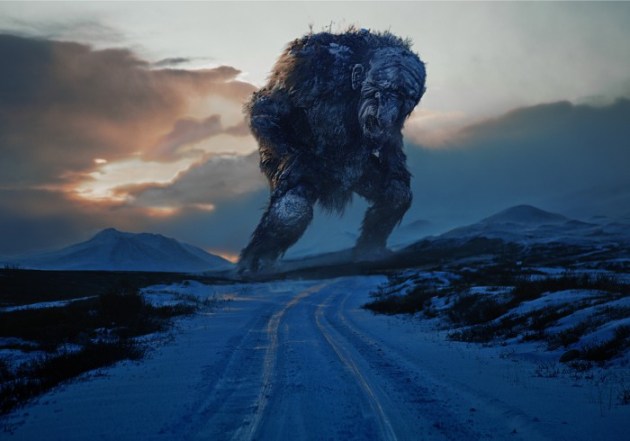
The concept is of course ludicrous and the Trolls are just way too silly looking to cause any real fear (in fact they are a lot more scary when they are just off camera), and as far as the comedy aspect is concerned, the jokes come much too late into the film and they are way too few (Well yes, the Muslim joke is rather enjoyable… but that was pretty much about it). Otherwise I felt I was left with a lot of running about in the forest (definitely too much for my taste) and not enough to care about.

Last but not least, even the big scary final Troll, instead of coming as a surprise is actually spoilt in the poster itself! Strange marketing campaign.

5.5/10