Ladri di Biciclette

Ladri di Biciclette (Bycicle Thieves) *****

Director: Vittorio De Sica.Cast: Lamberto MaggioraniEnzo StaiolaLianella Carell

Routinely voted one of the greatest films of all time by pretty much everyone, revered by modern directors (from Martin Scorsese to Woody Allen, from Steve Spielberg to Ken Loach) Bicycle thieves (the plural is key) is clearly one of the foundation stones of Italian neorealism (after Rome Open City) and, beyond that, a landmark in movie history. The use of available light, non professional actors and real locations may seem normal today, but at the time telling stories so far away from the conventions of Hollywood was basically revolutionary.And amazingly, especially for such a simple story (this could almost be the subject of a short film), the power of Ladri di biciclette is still palpable today. The tension in the film is more subtle than in Rossellini’S open city. Here there no war or Nazi to be afraid of. Instead the angst comes from the dehumanisation of the main character as the precariousness of his life leaves us desperately rooting for him. It’s a slow build towards the heart wrenching finale (still more subtle than ‘Open City’: no executions here), where I challenge anyone not to be moved by Bruno reaction to what’s happening to his dad.Possibly some of the best child acting you’ll ever see.The film was awarded a special Oscar in 1946 and basically paved the way for the best foreign film award. Just one of the many contributions to cinema from De Sica’s masterpiece.Routinely voted one of the greatest films of all time by pretty much everyone, revered by modern directors (from Martin Scorsese to Woody Allen, from Steve Spielberg to Ken Loach) Bicycle thieves (the plural is key) is clearly one of the foundation stones of Italian neorealism (after Rome Open City) and, beyond that, a landmark in movie history.The use of available light, non-professional actors and real locations may seem normal today, but at the time telling stories so far away from the conventions of Hollywood was basically revolutionary.And amazingly, especially for such a simple story (this could almost be the subject of a short film), the power of Ladri di biciclette is still palpable today.The tension in the film is more subtle than in Rossellini’s open city. Here there no war or Nazi to be afraid of. Instead the angst comes from the dehumanisation of the main character as the precariousness of his life leaves us desperately rooting for him. It’s a slow build towards the heart wrenching finale (still more subtle than ‘Open City’: no executions here), where I challenge anyone not to be moved by Bruno reaction to what’s happening to his dad.Possibly some of the best child acting you’ll ever see.The film was awarded a special Oscar in 1946 and basically paved the way for the best foreign film award. Just one of the many contributions to cinema from De Sica’s masterpiece.
Supernova

Supernova (****)

Director: Harry Macqueen. Cast: Colin Firth, Stanley Tucci, Lori Campbell, James Dreyfus, Ian Drysdale.

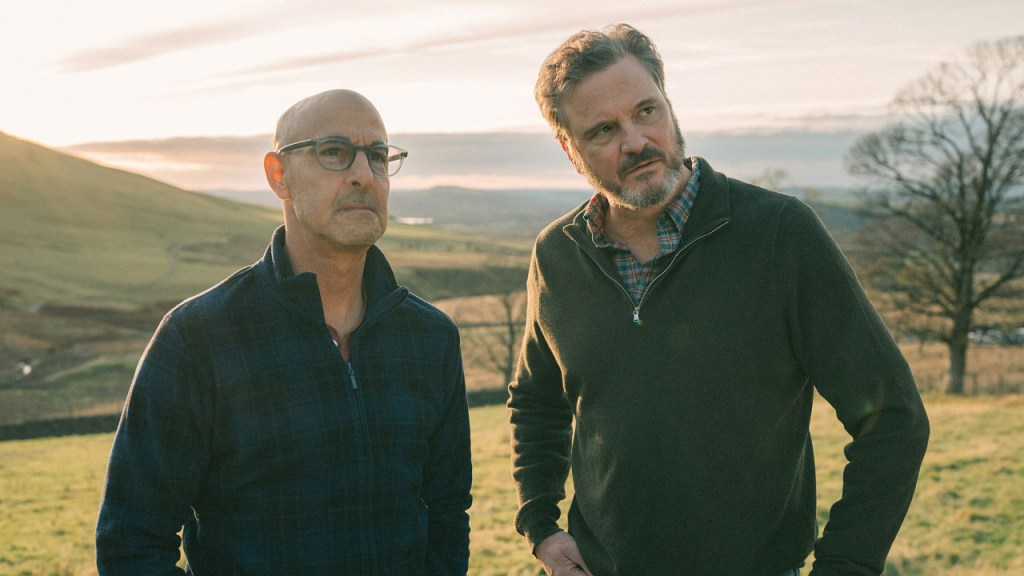
Unbelievable! This is the third film I’ve seen in a week about ‘dementia’ (the others being “The Father” and “Relic”). It seems to be the hot topic of the moment. Having said that, I have to be honest, I really really liked this one!!The subject itself is obviously bound to break your heart (and it bloody did! I was real wreck during several sequences), but here it’s all done incredibly tastefully, thanks to a smart and seemingly simple script which mixes wit and poignancy in the most restrained, sensitive and unflashy way, and all the better for it. At the centre of this Colin Firth and Stanley Tucci give two wonderfully nuanced performances as Sam and Tusker, a couple who has obviously been together for ages, and they’re now trying to figure out how to live with the impending shadow of mortality, as Tusker (Tucci) has been diagnosed with dementia. Their chemistry in the film is palpable (It helps that the two actors know each other and have been friends for decades) and it’s what makes the film so beautiful and affecting, but also so unexpectedly funny and real: their deadpan snappy dialogue as they’re lovingly arguing like an old married couple at the start of the film, as they’re driving a camper van across the north of England, is priceless and sets the tone for their relationship for the rest of the film. Despite everything they always try their hardest to keep it light because as it’s said in the film “You’re not supposed to mourn someone when they’re still alive” .Later on a scene where Sam reads aloud a letter written by Tusker where he essentially says goodbye to all his friends is heartbreakingly like few things I’ve seen lately (and crucially without being cheesy).Director Harry Macqueen handles it all with great care and sensitivity. He’s also not afraid of silences (which are often a lot more telling than dialogue) as he allows his actors to be quiet in several scenes just looking at each other. And while on the surface not a lot seems to happen in the film, underneath the emotion journey is a devastating tsunami.

The fim is been shown at the #LondonFilmFestival

After that it’s out in November.

8 1/2

8 1/2 (*****)

Director: Federico Fellini, Cast: Marcello Mastroianni, Claudia CardinaleAnouk Aimée 

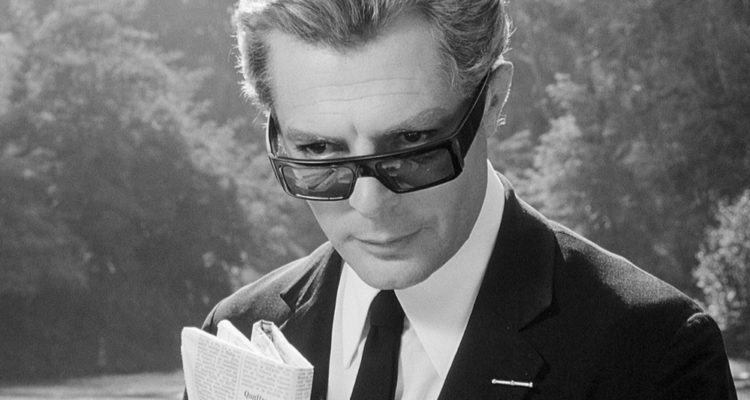
This is probably going to horrify some my friends here, but I need to make a confession: I don’t think I had ever seen this film from beginning to end until tonight.I’ve always been afraid that it would be too surreal for me and I would eventually find it a bit boring. How wrong I was!! There is a reason why this film ends up being among the top of most lists of the best ones ever made and why every director tries (and fail… yes I’ talking to you Sorrentino!!) to replicate it.8 1/2 may be about a director loosing his creativity and struggling to make a film, but actually I’ve hardly ever seen one which is so full of ideas, striking imagery, music and life!Right from very opening, with a spectacular nightmare sequence, you know you’re watching something special. And then it never stops, all the way through a carnival of characters, right to the joyous ending.The film is not just a very personal journey for Fellini, through his past, his weaknesses, his doubts, his dreams, but it’s also a sharp commentary on all the things he cared and felt strongly about: the Church, marriage life, adultery, sex, creativity and film making (among many other things).Visually it’s a real masterpiece. What Fellini does with his camera is beyond words: there’s hardly a frame that doesn’t deserve to be printed and put on a wall: the choreography, the blocking, the cinematography, the use of sound… Not to mention the music, not just the original score by Nino Rota, which can evoke beauty, happiness and sadness within the space of a few bars, but also the use of classical pieces (including Wagner’s Valkyrie, long before Coppola used it in Apocalypse Now). Fellini has an incredible eye not just for his frame, but for the incredible faces of every single characters who populate them. (Including and especially the extras). But there’s also more than just visuals and music here. This is also film full of emotions, jokes, laughs, memories and joy.Shame on me for waiting so long to watch this properly!On Amazon Prime (though I did watch it on a beautiful pristine Criterion bluray)And by the way… Mastroianni is a God!